
YOLO Meaning: What It Stands For, Origin and Urdu Meaning, Examples
YOLO meaning explained: what it stands for, where it came from, how people use it today, and its Urdu translation. Get the full story right here.
You’ve seen it in captions, texts, and tattoos, but do you know what YOLO really means? Four letters carry a whole philosophy about taking chances and making the most of life.
This guide explains what YOLO stands for, how the phrase took off, and how people use it today. You’ll also learn its Urdu meaning and when it signals bold living versus risky choices. Let’s dive right in.
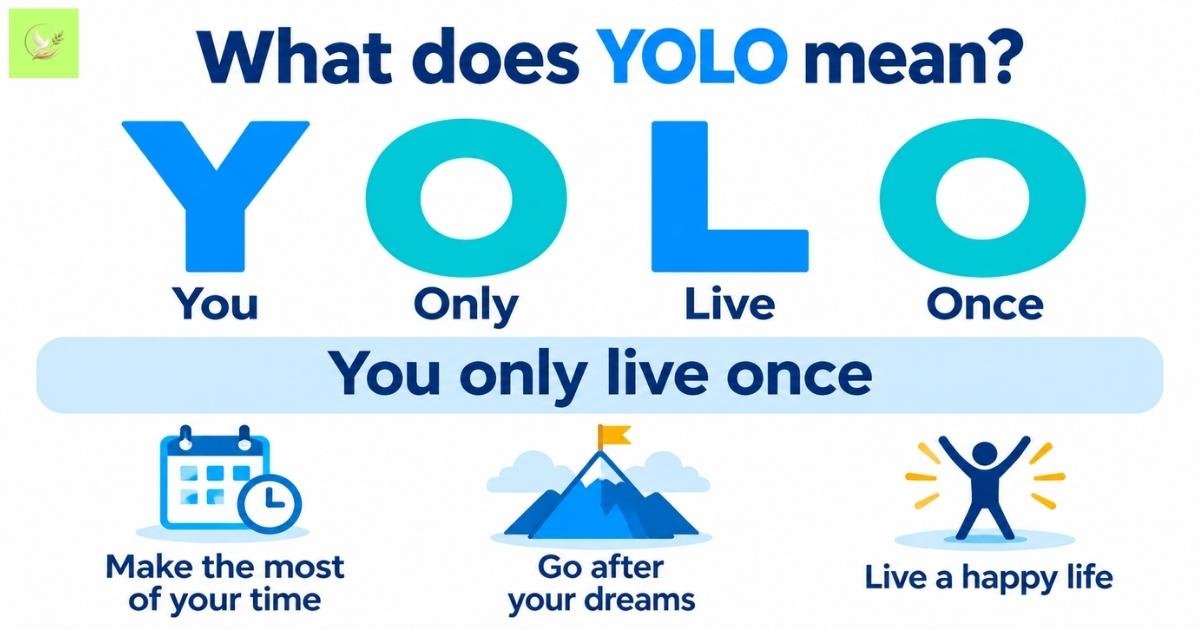
YOU ONLY LIVE ONCE.
These four words are the heart of the YOLO meaning. Here is what the phrase says on the surface and what it quietly asks of you.
Each word does a job. “Only” tells you life is limited. “Live” tells you to do more than exist. “Once” reminds you there is no replay. Put together, the phrase says time is precious, so use it on things that matter to you.
For many people, YOLO is a nudge. It might push you to:
- Say yes to the trip you keep postponing.
- Call the friend you’ve been meaning to call.
- Try the class, the job, or the hobby that scares you a little.
- Stop waiting for a “perfect” moment that never comes.
The idea has a famous Latin cousin, carpe diem, or “seize the day.” The Roman poet Horace used it in his Odes more than 2,000 years ago. YOLO is the casual, text-message version of the same advice.
Where YOLO came from
The YOLO meaning feels brand new, but its roots go back much further. This section follows the phrase from ancient advice to modern slang.

The sentiment “you only live once” has shown up in songs, poems, and sayings for centuries. The rock band The Strokes even released a song called “You Only Live Once” in 2006. Slang users had also begun shortening the phrase online before it hit the mainstream.
The big turning point came in 2011. Drake released “The Motto” (featuring Lil Wayne) on his album Take Care, and the hook said it plainly: you only live once. The line spread across Twitter, Instagram, and school hallways. By 2012, YOLO was on hashtags, T-shirts, and caps.
Here is a quick timeline:
- Ancient times: Horace writes about seizing the day (carpe diem).
- 2006: The Strokes release “You Only Live Once.”
- 2011: Drake’s “The Motto” makes the acronym a pop-culture word.
- 2012 and after: YOLO becomes a joke, a caption, and a lifestyle label.
Drake didn’t invent the idea, but he gave it a catchy four-letter shape. That’s the main reason people link YOLO with him today.
YOLO Meaning In Urdu
Many readers search for the YOLO meaning in Urdu, so here is a clear translation. Because YOLO is an acronym, Urdu uses a short phrase instead of a word-for-word match.
The most natural Urdu version is:
- Urdu script: زندگی صرف ایک بار ملتی ہے
- Roman Urdu: Zindagi sirf ek baar milti hai
- English: Life is given only once.
You may also hear “Zindagi ek hi baar milti hai,” which means the same thing. Bollywood fans may remember the 2011 Hindi film Zindagi Na Milegi Dobara (“Life Won’t Be Given Again”). It carries the same spirit and came out the same year as “The Motto.”
Here are a few sample sentences:
- “Chalo aaj ghoomne chalte hain, zindagi sirf ek baar milti hai.” (Let’s go out today, you only live once.)
- “Yeh mauqa mat chhodo, zindagi ek hi baar milti hai.” (Don’t miss this chance, you only live once.)
Urdu speakers often use the phrase in a heartfelt way, not just as a joke. It can encourage someone to forgive, travel, or chase a dream.
How people use YOLO now
Today YOLO shows up in texts, captions, and group chats, sometimes seriously and sometimes as a joke. Here are the most common ways you’ll see it.

- As a caption: “New city, new job. YOLO!” It often sits under travel photos or big life moments.
- As a playful excuse: “Ordered dessert first. YOLO.” Here the tone is light and a little ironic.
- As encouragement: A friend says “Just apply, YOLO,” to help you leap.
- As a hashtag: #YOLO tags posts about adventures, parties, and spontaneous plans.
Tone matters a lot. Among younger users, YOLO is often said with a smile, almost as a wink at its own popularity. If you like that spirit, you’ll enjoy our Motivational Gen Z blessings, which mix positive energy with real encouragement.
A good rule is to match the moment. A joke about snacks is fine, but saying “YOLO” about a serious decision can sound careless to people who care about you.
Brave or careless: where the line sits
YOLO can describe a brave leap or a reckless one. The difference usually comes down to how much thought sits behind the choice.
Signs of bravery:
- You understand the risk and can live with the worst outcome.
- The choice matches your values and goals.
- It doesn’t put other people in danger.
- You’d still feel okay about it next week.
Signs of carelessness:
- You’re ignoring safety, such as speeding or risky stunts.
- You’re spending money you need for rent or bills.
- You’re acting only because a crowd is pushing you.
- Future you will pay a price that present you refuses to see.
Try a simple test: “Am I choosing this, or is the moment choosing for me?” If fear is what holds you back from a good risk, a quiet prayer for strength can help you steady your heart before you decide.
Types that decide in the moment
Some people trust their gut and move fast, and they tend to live the YOLO motto naturally. This section describes how they think and how to keep their energy working for them.
Spontaneous decision-makers usually:
- Say yes to invitations without a long debate.
- Enjoy surprises, detours, and last-minute plans.
- Recover quickly when things go wrong.
- Bring fun and momentum to a group.
Their watch-outs are real, too. They may skip details like budgets, deadlines, or safety checks. That is where small guardrails help:
- Wait 24 hours before any big purchase.
- Tell one trusted person about a risky plan.
- Set a spending limit before the fun starts.
If you’re a last-minute traveler, send friends off with warm, creative travel blessings so every impulsive trip starts with good wishes.
Types that weigh it first
Other people prefer to think things through, and they can feel pressured by the YOLO motto. Their careful style is a strength, not a flaw.
Careful decision-makers typically:
- Compare options before choosing.
- Read reviews, check dates, and ask questions.
- Protect their money, time, and relationships.
- Feel calm when there is a plan.
The risk for them is staying stuck. Waiting for 100% certainty can mean missing good chances. A few habits can help:
- Use a “two-day rule”: decide within two days for any small choice.
- Take one small leap a month, like a new restaurant or a new route.
- Ask, “What’s the worst that could happen, and could I handle it?”
YOLO doesn’t ask a planner to become someone else. It only asks for one brave step now and then.
When a YOLO friend and a careful friend team up
Put a spontaneous friend and a careful friend together, and you often get the best of both. Here’s how that partnership works in real life.
Picture a weekend road trip. The careful friend books the hotel, checks the weather, and packs snacks. The YOLO friend spots a scenic overlook and shouts, “Pull over!” Together, you get a safe trip and a memorable one.
Each person brings something useful:
- The YOLO friend adds courage, humor, and new experiences.
- The careful friend adds safety, structure, and follow-through.
For the pairing to work well, a few habits help:
- Agree on one “non-negotiable” for safety or budget.
- Let the spontaneous friend choose one surprise per outing.
- Let the careful friend veto anything that feels unsafe, with no teasing.
- Say thank you for what the other person adds.
Find out why careful friends and YOLO friends get along
Opposites often make the strongest friendships. Here’s why these two styles click so well.
- They fill each other’s gaps. One brings the spark, the other brings the plan.
- They stretch each other. The YOLO friend learns to pause, and the careful friend learns to leap.
- They build trust. The careful friend knows a thrill-seeker will still look out for them, and the YOLO friend knows the planner will catch the details.
- They make better stories. The best memories mix a bit of risk with a bit of preparation.
- They respect different strengths. Neither tries to “fix” the other.
If you see yourself in one of these roles, try swapping for a day. Let the planner pick a surprise activity, and let the spontaneous friend plan the route. You may both learn something.
Is YOLO a good motto?
YOLO can be a healthy motto or a harmful one, depending on how you read it. The key is turning “You only live once” into “You only live once, so live well.”
Why it can be good:
- It reminds you not to waste time on regrets.
- It encourages gratitude for the present.
- It pushes you toward goals you’ve been avoiding.
Why it can go wrong:
- It can be used to excuse risky or selfish behavior.
- It may ignore long-term consequences.
- It can pressure people into choices they don’t want.
Faith traditions often share the first half of the idea. Psalm 90:12 says, “Teach us to number our days, that we may gain a heart of wisdom.” Notice the goal: wisdom, not recklessness. Milestone moments like a birthday are natural times to reflect, and a few kind words, such as happy birthday blessings, can turn that reflection into joy.
People interpret the motto differently, and that’s okay. The best version of YOLO is a reminder to live fully and thoughtfully.
Questions people ask
Readers often have the same few questions about the YOLO meaning. Here are quick, clear answers to the most common ones.
What does YOLO mean?
YOLO means “You Only Live Once.” People use it to say life is short, so they should enjoy it and try new things. It can be serious, playful, or sarcastic depending on the speaker.
What does YOLO stand for?
YOLO is an acronym for “You Only Live Once.” Each letter stands for one word: Y for You, O for Only, L for Live, and O for Once. In computer vision, there is also a separate YOLO that stands for “You Only Look Once,” but that is a different thing.
Who came up with YOLO?
No single person invented the idea. The saying is much older than the acronym. Drake popularized the acronym with “The Motto” in 2011, which is why many people credit him with making it famous.
Do people still say YOLO?
Yes, but less seriously than in 2012. Today it’s often used with a wink, in captions, jokes, and nostalgic posts. Some people find it dated, while others still love it.
Is YOLO an excuse to be careless?
It shouldn’t be. Living fully doesn’t mean ignoring safety, money, or other people. A smart YOLO choice is one you’ve thought through and can stand behind.
Read next
If you enjoyed learning the YOLO meaning, these ideas will help you put the motto into practice. Use them for inspiration, conversation starters, or your next group chat.
Life mottos to live by, and how to find the one that fits you
A motto is a short sentence that guides your choices. Here are a few classics:
- Carpe diem: Seize the day.
- Fortune favors the bold: A Latin proverb about taking smart risks.
- One day at a time: Focus on today, not everything at once.
- This too shall pass: Good and hard moments both end.
- Better safe than sorry: Plan first, then act.
- Do it scared: Courage means acting while afraid.
To find yours:
- Think of a time you felt proud of a decision. What guided you?
- Notice which words you repeat when you give advice.
- Pick a phrase that makes you feel calm and motivated, not pressured.
Bucket list ideas that fit your personality
A bucket list works best when it matches who you are. Try these:
- Spontaneous: Take a last-minute road trip with no fixed route.
- Planner: Save for and plan one dream trip, step by step.
- Creative: Finish a painting, a song, or a short story.
- Social: Host a big dinner for friends and family.
- Adventurous: Try a new sport, such as kayaking or rock climbing.
- Faith-centered: Join a service or mission trip.
- Homebody: Learn a family recipe and cook it from scratch.
- Traveler: Visit one new place each year, and ask for creative travel blessings before you go.
Who’s most likely to questions for friends, couples and family
“Who’s most likely to” is a fun game for group chats and gatherings. Read a question aloud and have everyone point at the person who fits.
For friends:
- Who’s most likely to book a trip on a whim?
- Who’s most likely to say “YOLO” before a big decision?
- Who’s most likely to bring a backup plan?
- Who’s most likely to make friends with a stranger?
For couples:
- Who’s most likely to plan a surprise date?
- Who’s most likely to say yes to a spontaneous adventure?
- Who’s most likely to remember every anniversary?
- Who’s most likely to cry at a movie?
For family:
- Who’s most likely to fall asleep at the table?
- Who’s most likely to tell the same story twice?
- Who’s most likely to start a dance party?
- Who’s most likely to organize the family trip?
Keep the mood light and kind. For a warm start to the gathering, add a few heartfelt family blessings.
Conclusion
The YOLO meaning is easy to remember: you only live once. Its roots stretch back to carpe diem, it became a household phrase through Drake’s “The Motto,” and in Urdu it says “Zindagi sirf ek baar milti hai.” The smartest way to use it is to pair courage with wisdom. Take the trip, make the call, and try the new thing, while still caring for your future self and the people around you. Share this guide with a friend who needs a little nudge, and bookmark it for your next caption.
FAQ Section
Is YOLO the same as carpe diem?
Not exactly. Carpe diem is Latin for “seize the day” and comes from the Roman poet Horace. YOLO shares the idea of using today well, but it’s casual modern slang and often sounds more playful or risk friendly.
How do you use YOLO in a sentence?
You can say, “I’m trying skydiving this weekend, YOLO!” or text a friend, “Come with us, YOLO.” Use it for fun, spontaneous plans rather than serious or risky decisions.
What is the YOLO meaning in Urdu?
In Urdu, YOLO means “Zindagi sirf ek baar milti hai” (زندگی صرف ایک بار ملتی ہے), which says life is given only once.
Is YOLO a positive or negative phrase?
It depends on context. It can inspire people to chase goals and enjoy life, but it can also be used to excuse careless behavior. The tone and the choice behind it decide the message.
What is the difference between YOLO and FOMO?
YOLO says “You Only Live Once” and pushes you to act. FOMO means “fear of missing out” and describes the anxious feeling that others are having more fun. YOLO is a motto, while FOMO is a feeling.
What does YOLO mean on Instagram and TikTok?
On social media, YOLO usually tags spontaneous adventures, fun nights out, or bold life moves. It’s often used as a caption, a hashtag, or a joking reply to a risky-sounding plan.
Is the YOLO in AI the same as the slang?
No. In computer vision, YOLO means “You Only Look Once,” an object-detection method introduced in 2015. It shares the acronym but has nothing to do with the slang phrase.
Can Christians use the YOLO motto?
Many do, in the sense of valuing time and living with purpose. Psalm 90:12 asks God to teach us to number our days so we gain wisdom. Views differ, but most agree that living fully should also mean living wisely.
What is a “YOLO moment”?
A YOLO moment is a spontaneous, memorable choice, like a surprise trip, a bold haircut, or saying yes to something new. The best ones are exciting but not harmful.
What is the opposite of YOLO?
There is no single opposite, but sayings like “look before you leap” and “better safe than sorry” capture the cautious mindset. A balanced approach uses both.
