IYKYK Meaning: What It Stands For and How to Use It Right
IYKYK meaning explained: learn exactly what “if you know, you know” stands for and how to use it in texts and social posts, plus real examples.
You’ve seen it under a vacation photo, a concert clip, or a cryptic caption, and everyone else seemed to get the joke. That’s the power of IYKYK. Understanding the IYKYK meaning helps you decode these posts instantly and stop feeling left out.
Below, you’ll learn what the abbreviation stands for, where it came from, and how to use it in texts and captions confidently. Keep reading to use it right.
What does IYKYK mean?
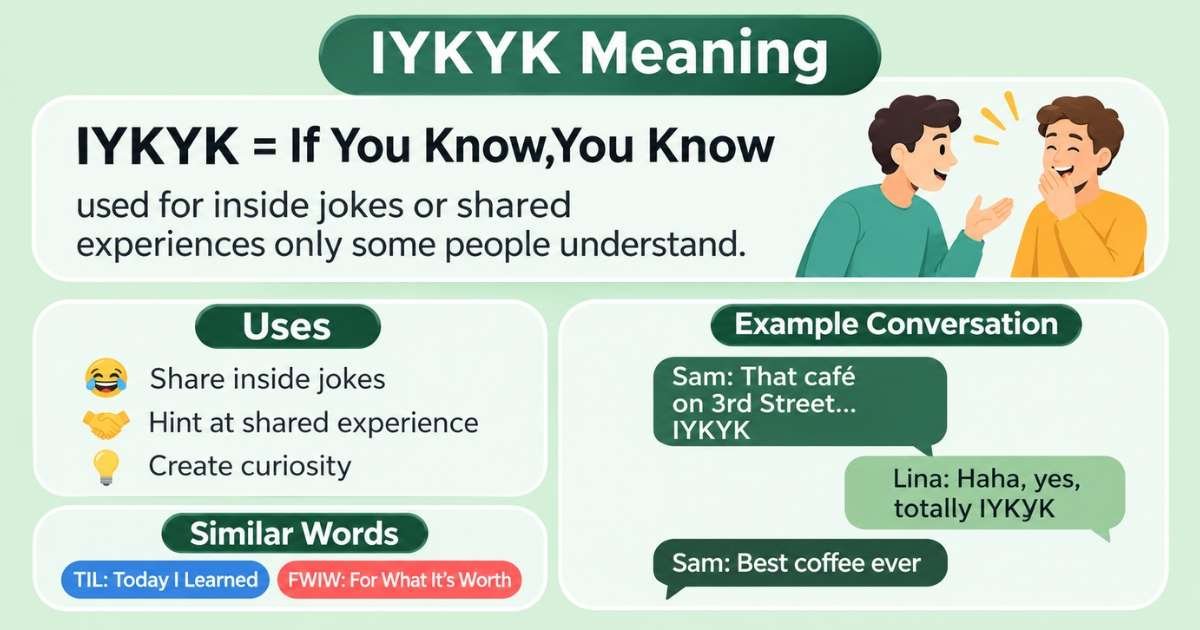
IYKYK is a short way to say that something is understood only by people who share the same experience, knowledge, or taste. Here is what it signals, how it feels in a conversation, and why people keep using it.
The speaker isn’t going to explain the reference, and that’s the whole point. Think of it as a wink in text form. A caption under a blurry concert photo, a comment about a restaurant’s secret menu item, or a reply about “the incident at Grandma’s” can all carry an IYKYK without a single detail added.
The phrase usually does one of four jobs:
- Shared experience: “You were there, so you get it.”
- Insider knowledge: A hidden gem, a niche hobby, or a cult-favorite product.
- Playful exclusivity: A friendly nod between people in the know, not a locked door.
- Nostalgia: Memories that only one friend group, family, or generation holds.
The tone is usually light and affectionate. Sometimes it is teasing, and sometimes it hints at gossip, so context matters. When we write shareable captions and messages, we’ve noticed the IYKYK meaning lands best when the audience truly shares the reference. If half your followers are confused, the post can feel more awkward than clever.
Families lean on the phrase too. A line in a group chat about a legendary road trip, or a caption beside one of our family blessings, can carry years of shared memory in five letters.
History and usage
The phrase is older than the abbreviation, so this section looks at how “if you know, you know” moved from everyday speech into captions and group chats. It also shows where people use it today.

The exact origin is hard to pin down. People have long used “if you know, you know” in spoken English to hint at a shared understanding. As texting and social media rewarded short messages, the phrase shrank into IYKYK and spread through captions, hashtags, and comments on Instagram, TikTok, and other platforms. Dictionaries have since taken notice. Merriam Webster covers it in its slang coverage, and Cambridge Dictionary lists it as a written abbreviation.
Today you will see IYKYK in a few common places:
- Captions: A photo or video with a reference only some followers will catch.
- Comments: A quick “IYKYK” under a post that reminds you of a shared memory.
- Texts and group chats: A way to bring up an inside joke without retelling it.
- Brand and niche posts: Hints about hidden menu items, hobby secrets, or cult-favorite products.
That sense of belonging is the same spark behind our creative unity blessings, which celebrate the bonds that hold people together. IYKYK works in a similar way: it quietly says, “We’re in this together.”
A few simple habits keep it friendly:
- Use it for lighthearted references, not painful or sensitive topics.
- Make sure most of your audience will get the reference.
- Skip it in formal emails, job applications, and professional messages.
- Never use it to leave someone out on purpose.
Examples of IYKYK
Seeing IYKYK in action makes it easier to use. These examples show how it reads in captions, comments, texts, and replies.

In captions:
- “Sunset at that one spot behind the old library. IYKYK.”
- “Saturday morning pancakes, extra syrup. IYKYK.”
In comments:
- “The second song on that album hits different. IYKYK.”
- “That ending scene still gets me. IYKYK.”
In texts and group chats:
- “Did you try the sauce at the corner place? Not saying more. IYKYK.”
- “Who brought the speaker to the lake trip? 😂 IYKYK.”
For birthdays and close friends:
- “Happy birthday to my partner in crime. The 2 a.m. pancake run, IYKYK.” Pair a line like this with something heartfelt from our happy birthday blessings so the post feels both fun and sincere.
For niche interests:
- “Their hidden menu is the real star. IYKYK.”
Ways to reply:
- “Oh, I know exactly what you mean.”
- “Say less. 😂”
- “Wait, I don’t know! Tell me.”
That last reply is perfectly fine. IYKYK is an invitation to connect, not a test you have to pass, and asking for the story often leads to a good conversation. As a rule, one reference per post keeps the message clear and the mystery fun.
Also read about: YOLO Meaning: What It Stands For
Slang
IYKYK rarely travels alone. It shows up beside a whole vocabulary of internet slang, much of it popular with Gen Z, and understanding those terms helps you read captions and comments with confidence. If you would rather post something uplifting, try our motivational Gen Z blessings.
AFAIK
Short for “as far as I know.” People use it to share information while admitting they might not have the full picture. Example: “AFAIK, the party starts at seven.” It is handy in texts when you want to sound helpful without promising accuracy.
AF
An intensifier that stands for “as f***.” It adds emphasis, as in “tired AF” or “proud AF.” Because it abbreviates a profane phrase, keep it for casual chats with friends and skip it in family-friendly, faith-based, or professional posts.
algospeak
Coded words and playful spellings people use to avoid being flagged or suppressed by social media algorithms. A common example is saying “unalive” instead of a more direct word. On TikTok and other platforms, algospeak can make a post easier to share, though it can also confuse readers who do not know the code.
bet
A casual way to say “okay,” “sounds good,” or “I’m in.” Example: “Dinner at seven?” “Bet.” It can also work as a friendly challenge, like “You can’t do it.” “Bet.” In group chats, it is a quick yes.
based
Usually means confident, authentic, and unbothered by what others think. Its meaning has shifted over time, and some people now use it mostly to show agreement or approval, especially in online debates. Context matters, so check the surrounding conversation before assuming the tone.
bias
In Knpop fan culture, your bias is your favorite member of a group. Fans use it in sentences like “She’s my bias.” Outside that world, “bias” still means a leaning or prejudice, so the setting tells you which meaning applies.
aura
Your personal vibe, charisma, or energy. People talk about gaining or losing “aura points” when someone does something impressive or embarrassing. Example: “Holding the door for everyone? +100 aura.”
aura farming
Deliberately acting in ways that build a cool, magnetic image. It is often used playfully, such as when someone seems to be doing something just to look effortlessly impressive. On TikTok, the term can describe both genuine charm and obvious image building.
ate (and left no crumbs)
Praise for doing something extremely well, with no flaws at all. Example: “She sang that song and ate, left no crumbs.” It is a popular compliment under performance clips, outfits, and big wins.
babygirl
A term of endearment or admiration. People use it for someone they find charming or attractive, and fans sometimes use it playfully for a favorite celebrity. Tone and relationship matter, so it fits best between friends or partners who are comfortable with it.
baddie
Someone confident, stylish, and self-assured, usually with a polished look. It is often a compliment, as in “She’s such a baddie.” In other settings, “baddie” can simply mean a bad guy, so context helps again.
beige flag
A quirk that is neither good nor bad, just a little odd. Think of someone who eats the same plain meal every day or insists on one specific mug. The term sits between a green flag (good sign) and a red flag (warning sign).
bed rotting
Spending a long stretch in bed on purpose to rest, scroll, or watch shows. People often describe it as a recovery day after a busy week. It is fine now and then, but if you feel stuck or low for a long time, reaching out to someone you trust is a good step.
almond mom
A parent, often a mother, who pushes diet culture, restrictive eating, or comments on food and weight. The name comes from a viral joke about offering a few almonds instead of a real meal. Because it touches on body image, use the term thoughtfully.
lovebomb
Short for “love bombing,” which means showering someone with intense affection, gifts, or promises early on to gain control or loyalty. It is a recognized warning sign in unhealthy relationships. Genuine care, like a sincere good night prayer message for my love, grows steadily and respects the other person’s pace.
Resources
New slang appears all the time, and meanings can change from one community to another. These trusted places can help you check a term before you use it.
- Merriam-Webster’s slang section: Good for clear, editor-reviewed definitions and example sentences.
- Cambridge Dictionary: Helpful for written abbreviations and everyday English.
- Know Your Meme: Useful for tracing how a viral phrase or joke spread online.
- Platform comment sections: Reading how real people use a term shows you tone and context.
A good habit is to check two sources and notice the date, since slang can shift quickly. If a term still feels unclear, ask a friend. Most people are happy to explain a joke they love.
Conclusion
IYKYK is a small phrase with a big job: it nods to shared memories, secrets, and inside jokes without explaining a thing. Now you know what it stands for, where it shows up, and how to reply with confidence. Use it with people who share the reference, keep the tone kind, and check a trusted dictionary when new slang appears. Bookmark this guide for the next caption that stumps you.
FAQ Section
What does IYKYK stand for?
It stands for “if you know, you know.” The phrase suggests that only people with the same experience or knowledge will understand the reference.
What does IYKYK mean in a text message?
In a text, it hints at a shared memory or inside joke without explaining it. It tells the other person you both understand what you are talking about.
How do you respond to IYKYK?
If you get the reference, reply with something like “I know exactly what you mean.” If you don’t, it’s perfectly fine to say, “Wait, tell me!”
Where did IYKYK come from?
The spoken phrase “if you know, you know” is older than the abbreviation. Social media and texting shortened it to IYKYK, and the exact first use is hard to trace.
Is IYKYK the same as an inside joke?
Not exactly. An inside joke is the shared reference itself, while IYKYK is the phrase people use to point to it without explaining.
How do you use IYKYK in a caption?
Add it after a short, mysterious line about a photo or moment. For example: “Sunday morning at our usual spot. IYKYK.”
Is IYKYK appropriate in professional emails?
Usually not. It is casual slang and can come across as unclear or exclusive in formal or workplace writing.
What is the difference between IYKYK and IDK?
IDK means “I don’t know” and admits a lack of knowledge. IYKYK hints that the speaker and certain others do know something.
Can IYKYK be used negatively?
Yes. If it is used to deliberately leave someone out or hint at gossip, it can feel unkind. Keep it playful and inclusive.
Is IYKYK only used by Gen Z?
No. Gen Z helped popularize it online, but people of many ages now use it in captions, comments, and group chats.